
What YOU need to know about the FDA’s Grain-Free Diet Alerts!
The FDA has investigated potential links between DCM and dog diets, specifically grain-free dog food diets. We’ve compiled some things you may want to know to understand these alerts.
The FDA’s full June 27th 2019 update can be found here:
FDA Investigation into Potential Link between Certain Diets and Canine Dilated Cardiomyopathy
Why did the FDA investigate grain free dog food?
There’s no need to panic just yet. We know you want to keep your dogs happy and healthy and diet plays a HUGE part.
According to Dr. Jerry Klein, the Chief Veterinary Officer of the AKC:
“The FDA is investigating a potential dietary link between canine dilated cardiomyopathy (DCM) and dogs eating certain grain-free dog foods. The foods of concern are those containing legumes such as peas or lentils, other legume seeds, or potatoes listed as primary ingredients. The FDA began investigating this matter after it received reports of DCM in dogs that had been eating these diets for a period of months to years. DCM itself is not considered rare in dogs, but these reports are unusual because the disease occurred in breeds of dogs not typically prone to the disease.”
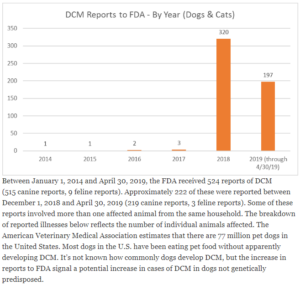
Here’s the most recent update from the FDA we could find that has the current counts of reported DCM cases:
So What is Dilated Cardiomyopathy (DCM)?
DCM, or Dilated cardiomyopathy, is a disease that affects the heart muscle in canines. In short, DCM affects the heart’s ability to pump blood, which tends to result in congestive heart failure.
Large breeds like Great Danes, Saint Bernards, Newfoundlands and other such sized dogs are predisposed to DCM. DCM is less common in smaller breeds.
The reports submitted to the FDA span included such a wide range of breeds that included many without a known genetic predisposition to DCM that they became alarmed. The early reports mentioned many of these cases the dogs had a diet of grain free foods and that’s when the FDA jumped in.
Should you be Concerned About Grain-Free Dog Food?
In July 2019 the FDA updated the public on their investigation on diet and canine DCM. Per the FDA:
“To better characterize diets reported in DCM cases, product labels were examined to determine whether the product was grain-free (did not contain corn, soy, wheat, rice, barley or other grains), and whether the products contained peas, other lentils including chickpeas and beans, or potatoes (including sweet potatoes). Because so many products contained peas and/or lentils, a category was created for “peas and/or lentils”. More than 90 percent of products were “grain-free”, and 93 percent of reported products had peas and/or lentils. A far smaller proportion contained potatoes.”
So far there is no proof that any of the listed ingredients actually cause DCM, however the FDA has stated their investigation is ongoing. They are also awaiting monthly lab test results from Chesapeake Veterinary Cardiology Associates (CVCA), a multi-location veterinary cardiology practice based predominantly in the Mid-Atlantic states, which has provided comprehensive records for some DCM cases.
So in short, yes, you should be concerned enough to at least talk to your veterinarian.
What are the brands the FDA is investigating?
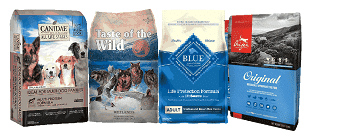
The same June 2019 update from the FDA includes the names of dog food brands that were named 10 times or more in reports submitted through April 30, 2019. Most reports were for dry dog food, but raw, semi-moist and wet foods were all represented.
Acana (67 reports)
Zignature (64 reports)
Taste of the Wild (53 reports)
4Health (32 reports)
Earthborn Holistic (32 reports)
Blue Buffalo (31 reports)
Nature’s Domain (29 reports)
Fromm (24 reports)
Merrick (16 reports)
California Natural (15 reports)
Natural Balance (15 reports)
Orijen (12 reports)
Nature’s Variety (10 reports)
Nutrisource (10 reports)
Nutro (10 reports)
Rachael Ray Nutrish (10 reports)
Should We Stop Feeding Grain Free Diets?
Dr Freeman, DVM published an update to the Journal of the American Veterinary Medical Association, to provide more updates on the research on canine DCM and emphasized the issue is not just affecting grain-free diets.
The update can be found here: Diet-associated dilated cardiomyopathy in dogs: what do we know?
“Subjectively, it also appeared that these dogs were frequently eating BEG diets containing foodstuffs such as kangaroo, duck, buffalo, salmon, lamb, bison, venison, lentils, peas, fava beans, tapioca, barley, or chickpeas as major ingredients.”
“The apparent link between BEG diets and DCM may be due to ingredients used to replace grains in grain-free diets, such as lentils or chickpeas, but also may be due to other common ingredients commonly found in BEG diets, such as exotic meats, vegetables, and fruits,” Freeman wrote.
Dr Freeman did have some suggestions for dogs in which possible diet related DCM has been diagnosed:
“For dogs in which possible diet-associated DCM is diagnosed, we recommend the owner change the diet to one made by a well-established manufacturer that contains standard ingredients (eg, chicken, beef, rice, corn, and wheat). In the authors’ (LMF and JER) hospital, we recommend several specific products with a low sodium content that only contain standard ingredients.32 We also emphasize that changing to a raw or home-prepared diet may not be sufficient to improve cardiac abnormalities and may increase the risk for other nutritional deficiencies or infectious diseases. For dogs that require a home-prepared diet or that have other medical conditions that require special dietary considerations, consultation with a board-certified veterinary nutritionist is recommended.”
So it appears grain free feed may not be the ONLY factor in this recent spate of DCM across multiple breeds.
That said, we HIGHLY recommend talking to your dogs vet.
What Brands or Foods are Safe?
We’re not going to link to direct food types/brands here(we’re not veterinarians after all!), but we did find a way for you to get help in the process of making more objective decisions about your pets food.
Check out the Dare To Ask tool from the Pet Nutrition Alliance.
The PNA is an independent, nonprofit organization dedicated to providing resources to support veterinary professionals in helping pets live longer through better nutrition.
IMPORTANT:
If your dog has been diagnosed with DCM, PLEASE REPORT IT. The FDA has a helpful website with instructions for the reporting process here:
How to Report a Pet Food Complaint