
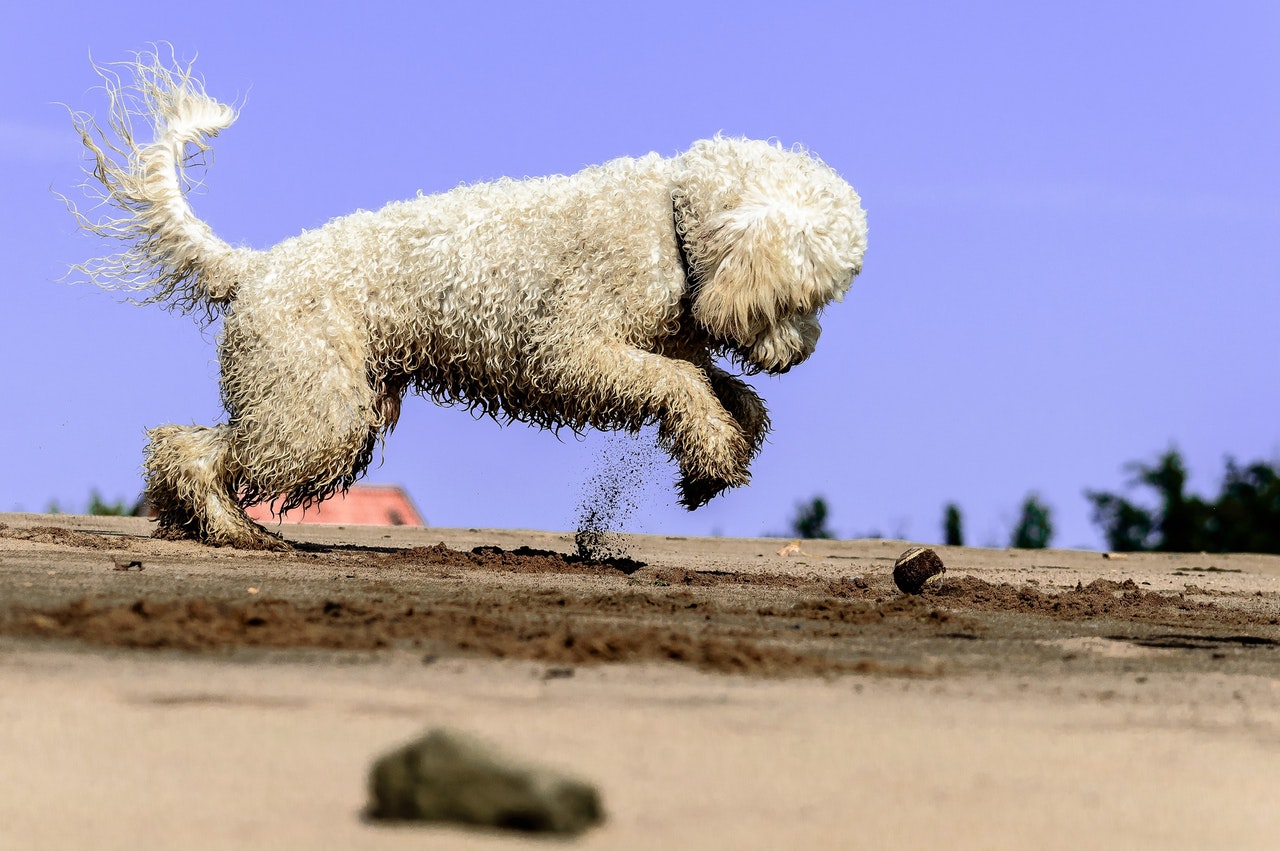
Why does my dog smell?
Why does my dog scratch itself all day?
Why does my dog roll around in the dirt?
Those are a few simple questions and for the most part, usually have simple answers.
Dogs in some regards, are just like people. They need a bath and then need to be groomed in general for good health and hygiene. For me, washing, brushing, and trimming claws on the dog is one of those things that’s like a chore from when you were a kid. I know it has to get done, but that doesn’t mean I want to sit down and do it every week.
There are really 3 important grooming aspects you should keep in mind and practice with your dog:
- Washing with a quality dog/pet safe shampoo
- Brushing
- Trimming
1. WASHING
Stupid humans and their stupid shampoo!
The first one, Washing, seems obvious at first. That is until you get to the nearest pet supply store or scroll through Amazon and find there’s literally HUNDREDS of options for dog shampoo to choose from.
Washing with a good DOG shampoo is essential to keeping your dog healthy and happy. There’s a bajillion shampoos out there. Some are made strictly for cleaning. Some are for helping get rid of fleas and ticks. Others, seem to be for the sole purpose of making your dog smell better. The problem is, many of these dog shampoos have harsh chemicals in them that can make your dog feel uncomfortable and in some cases even sick.
How do you know which one is good? That’s the not so easy part.
From what we can find, if you know the big 3 to avoid, then you have a better idea of what should be safe for your dog to use.
You should probably avoid these 3:
- Preservatives
- Sulfates
- Ethanolamines (MEA, DEA, and TEA-no not the leaf)
Now you’re wondering: “How do I know what’s a preservative?“, or “What is DEA, is this some sort of drug ring here or what?“. Lets try to break some of these down a bit.
PRESERVATIVES
Formaldehyde is a big one. It’s considered a known carcinogen and easily absorbed through the skin. Many times manufacturers will try to avoid the formaldehyde problem by using “derivatives” of formaldehyde and just list them on the label as “Preservatives”. Problem is, most of those derivatives might not be formaldehyde, but they release formaldehyde over time.
Parabens are another type of preservative frequently found in pet shampoo and washing products. Pareabens are thought to have a cumulative effect in the body, and can are thought to potentially cause estrogen disruption, breast cancer, and reproduction harm. They can be a bit trickier to spot on the label though. Look for things like propylparaben, methylparaben, or butylparaben.
Sodium Benzoate is another preservative you may want to avoid. It could be listed as benzoic acid, or may even be listed sometimes as “sodium salt”. Sodium Benzoate on it’s own should be relatively harmless, but when it mixes with Vitamin C(citric acid) it can convert to BENZENE. Benzene is known to be related to causing all kinds of cancerous blood disorders, leukemia, etc…
SULFATES
Sulfates are in a class of cleansers called anionic surfactants that are what’s usually used as the primary “cleaning agent” in the shampoo. They’re actually a synthetic chemical based on sulfur, derived from usually petroleum oil or lauryl alcohol(made from some vegetable type of oil like coconut). Two of the most common you’ll find are sodium lauryl sulfate and sodium laureth sulfate. Both are skin irritants and can cause dryness and itching.
To spot the sulfates on the labels you may want to look for:
- Sodium Lauryl Sulfate
- Sodium Laureth Sulfate
- Ammonium Lauryl Sulfate
- Ammonium Laureth Sulfate
- Sodium Coco Sulfate
- TEA Lauryl Sulfate
- MEA Lauryl Sulfate
Remember those last 2 in the list above… Those are those pesky ethanolamines we mentioned earlier.
ETHANOLAMINES
Ethanolamines are made from amino acids and alcohols. They’re used as emulsifiers and ph adjusters. They’re also what gives your shampoo that nice sudsy foaming action and creamy texture.
Here’s where you can run into problems with the ethanolamines. In some cases they can form nitrosamines. That happens when the ethanolamines are mixed with some types of preservatives. Remember those preservatives we talked about earlier? Nitrosamines are listed as possible carcinogens.
Things you can look for on the label:
- TEA, DEA, or MEA
- Triethanolamine
- Diethanolamine
- Cocamide DEA
- Cocamide MEA
- DEA-cetyl phosphate
- DEA oleth-3 phosphate
- Lauramide DEA
- Linoleamide MEA
- Myristamide DEA
- Oleamide DEA
- Stearamide MEA
- TEA-lauryl sulfate
WOW! That’s a LOT. Still, if you can remember to avoid the Preservatives, Sulfates, and DEA, TEA, and MEA then odds are, you’re probably in the clear.
Now that you know a little bit about the BIG 3, they’re not something you really want to be smearing all over Fido are they?
CHECK OUT OUR LIST BELOW OF OUR FAVORITE DOG SHAMPOOS.
They’re all on AMAZON which means you can probably get them shipped to your door fast and you can look at the ingredient list on the label without running around the store with a magnifying glass looking like a nut trying to read all the fine print on the labels. <- Don’t ask me how I know…
TAILWAGGERS FAVORITE DOGGY SHAMPOOS!
2. BRUSHING
You really need to be brushing your dog regularly. Brushing helps clear out shed fur and helps prevent matting. It also makes it easier when it comes time to do the WASHING!
One thing to keep in mind is to be careful around sensitive areas like the ears, mouth, eyes, and genitals.
Brushes and combs, just like shampoos, are plentiful in pet supply stores and online at places like Amazon. How do you know which one to get? Good question considering there’s different brushes and combs for different types of fur and different reasons for brushing.
DUAL SIDED PIN/BRISTLE RUSHES
We love the FURminator Dual Grooming Brush. These things work great on our rescued pitbull terrier.
They’re kind of like the swiss army knife of dog brushes. They have bristles on one side and pins on the other. You can use the bristle side remove shed hair and light matting and the pins on the flip side is great for working out tangles on longer hair breeds.
RAKE STYLE BRUSHES
Rakes are really for clearing out matting and getting debris out of fur. If you can’t get it out with a dual sided brush, it might be time for a rake. They work quite well on breeds with longer coats. No surprise we like the FURminator Rake here as well. Unlike some of the other brands the pins in the FURminator rakes actually rotate to help prevent catching on your dogs skin and causing scratches and other irritation.
Pat Your Pet is another company that makes a great rake. Be forewarned, you ARE going to get a lot of fur out. They make this Two-Sided Undercoat Rake that is absolutely amazing at clearing out shed fur.
Obviously based on the name it’s two-sided. The nine tooth side is great for tricky tangles and the 17 tooth side is for de-shedding. The rounded no scratch teeth get the job done without scratching up your dog.
SLICKER BRUSHES
For a breed with a thick, long or really curly coat, they are GREAT at untangling knots, clearing matting, and general deshedding.
We personally like Safari’s Self-Cleaning Slicker Brush. It can actually be used on short or long hair breeds and has a self cleaning feature. No fidding with digging matted hair out of the bristles with your fingers. Open your trash can lid and push the button on the brush. It’s that simple. You press the big button on the back of the brush and it retracts the pins so you can just dump the excess fur.
WAHL makes a good slicker brush as well. It’s not self cleaning, but Wahl has been around for a long time and they’re a well respected brand. The Wahl Large Slicker Brush has soft ergonomic handle that fits the hand fairly well.
CHECK OUT TAILWAGGERS BRUSH LIST!
COMBS
Lets talk combs for a minute. Your dog has ears. Your dogs ears have fur. You really didn’t think you were going to fit those big fat brushes you saw earlier in your dogs ears did you?
There’s another good reason for combs (and no we’re not talking about elderly dog comb-overs).
Sometimes brushes just don’t get the matting out. Brushes are great and all for everyday cleaning, but there’s times when the brushes just aren’t quite enough to get the job done, in particular when the matting is down deep on a long, thick coat.
I would look at combs that are at least stainless steel and have rounded teeth. Many have both fine and coarse teeth in a half and half configuration.
3. TRIMMING

I Kill You!
Trimming is always a hot topic. Visions of Fido running away and hiding under the bed dance in my head… Some dogs like trimming, most don’t and for a variety of reasons. Usually it’s related to fear and anxiety from pain suffered during a claw/nail trimming gone wrong.
I’ve said it before and I’ll say it again…THROW AWAY THE SCISSOR AND GUILLOTINE STYLE NAIL CLIPPERS!
Most of the dogs I’ve seen over the years that cause trouble or freak out during a nail trimming is because of pain inflicted during a previous trimming. Think about the anatomy of a dogs claws. The cuticle or quick is inside the nail and also contains the nerve endings. People often clip the nails too close to or actually clip the quick inside the nail causing pain and bleeding.
Those scissor and guillotine trimmers don’t stay sharp forever. What do you think happens when those dull bladed scissor/plier style trimmers start clamping down on a claw and it doesn’t slice right through right away? It’s like putting your finger in a pair of pliers and squeezing!
That’s where claw/nail grinders come in to save the day!
A few years back I switched to using a battery powered Dremel tool with a sanding wheel on it to grind away the dogs claws. It was an idea a friend had passed along that worked for their dog.
I did some cursory research and talked to my Veterinarian who said it should be fine as long as you don’t get too close to the quick. Needless to say I had to try it.
That was a whole different experience. The dog was apprehensive initially due to the noise from the motorized gizmo, but once I got going she was a completely different dog. The shaking and escape attempts from previous scissor style clippers was gone. She laid there on her back and didn’t fight me a bit. I’ve never used anything else since!
These days there are similarly designed tools JUST FOR YOUR DOGS CLAWS! We’ve dropped a few here to take a look at.
It’s a 2-speed, lightweight battery powered tool design ensures nail trimming is safe, efficient, and painless for your dog. It runs on 2 AA style batteries.
We hope this article helps get you started in the right direction. This was our list of the Best Shampoos and Grooming Products. We’ve spent years trying various products for our dogs and discovered some work for us and some just don’t. That doesn’t necessarily mean the product was bad, just that it didn’t work for us.
As usual, keep in mind WE ARE NOT MEDICAL PROFESSIONALS. If you are in ANY doubt about any shampoo or tool you plan on using on your pet, PLEASE talk to your veterinarian!
P.S. – If you’re interested in purchasing any of the products in the article just Click on the Link and you’ll be taken to an Amazon store where you can read more reviews and make your purchase safely.
P.P.S. – Check out our article on KONG Toys – Kong Classic – The absolute BEST dog toy that also doubles as a training aid